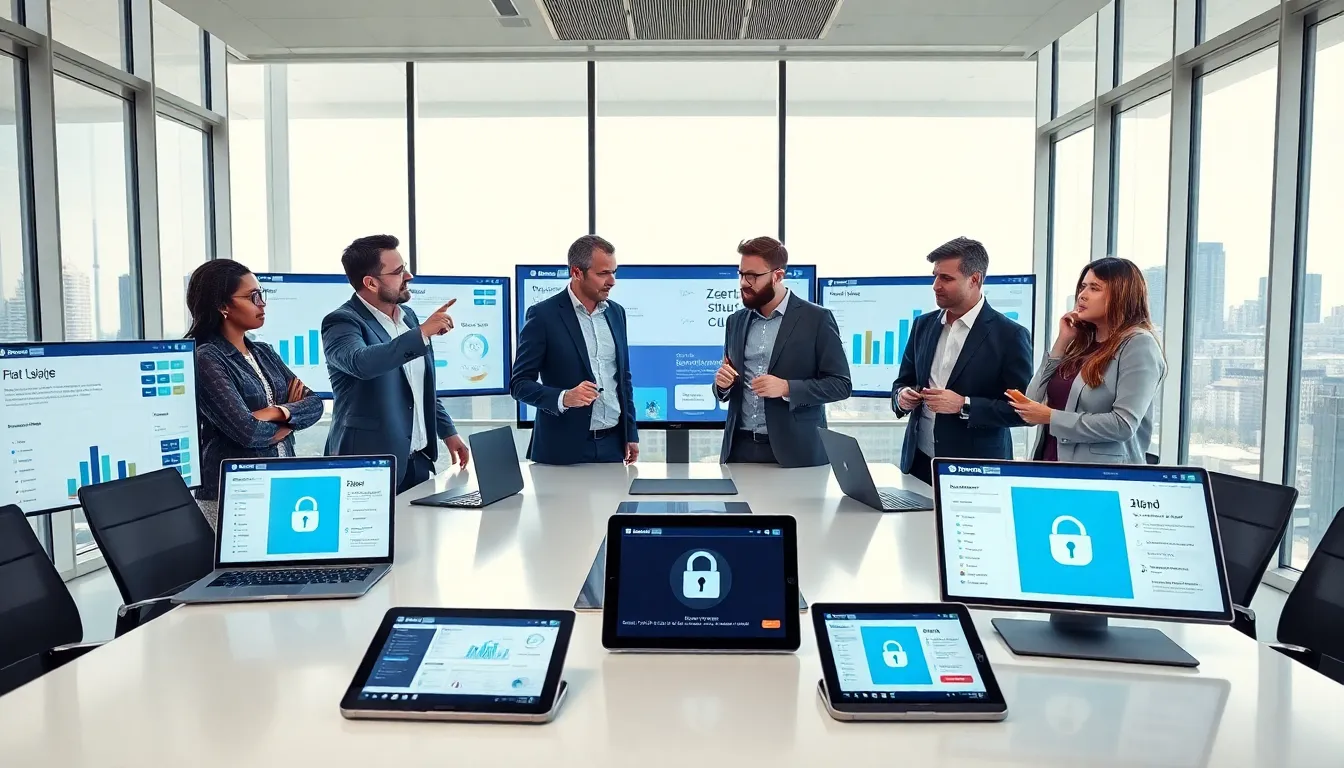
Enterprise software techniques shape how modern organizations operate, scale, and compete. Companies that adopt the right approaches gain efficiency, reduce costs, and respond faster to market changes.
This article breaks down the core enterprise software techniques that deliver real results. From architecture decisions to development methodologies, integration strategies, and security practices, each section covers what teams need to know. Whether a business runs legacy systems or builds new platforms, these enterprise software techniques provide a foundation for sustainable growth.
Table of Contents
ToggleKey Takeaways
- Enterprise software techniques like microservices and event-driven architecture enable faster deployments and responsive, scalable systems.
- Agile and DevOps practices dominate modern development, with 95% of organizations using Agile and DevOps teams deploying code 208 times more frequently than low performers.
- API-first design and iPaaS solutions streamline integration, reducing project timelines from months to days.
- Security by design is essential—data breaches cost companies an average of $4.45 million, making threat modeling and OWASP compliance critical enterprise software techniques.
- Hybrid architecture models balance reliability and innovation by keeping core functions monolithic while building new features as microservices.
- Compliance frameworks like HIPAA, PCI DSS, and GDPR directly shape how organizations implement data storage, access control, and encryption strategies.
Understanding Enterprise Software Architecture
Enterprise software architecture defines how systems connect, communicate, and scale. A solid architecture supports business goals while remaining flexible enough to adapt over time.
Monolithic vs. Microservices
Monolithic architecture bundles all application components into a single codebase. This approach works well for smaller teams and simpler applications. Deployment happens in one step, and debugging follows a straightforward path.
Microservices split applications into independent services. Each service handles a specific function and communicates through APIs. Netflix, Amazon, and Uber use microservices to deploy updates quickly without affecting entire systems. Teams can work on different services simultaneously, which speeds up development cycles.
Many organizations adopt a hybrid model. They keep stable, core functions in monolithic structures while building new features as microservices. This enterprise software technique balances reliability with innovation.
Service-Oriented Architecture (SOA)
SOA organizes software into reusable services. These services communicate through standardized protocols, typically SOAP or REST. Large enterprises favor SOA because it promotes code reuse and reduces redundancy across departments.
The key difference between SOA and microservices lies in scope. SOA services tend to be larger and handle broader business functions. Microservices focus on granular, single-purpose tasks.
Event-Driven Architecture
Event-driven architecture responds to real-time triggers. When a customer places an order, that event triggers inventory updates, payment processing, and shipping notifications. This enterprise software technique enables responsive, loosely coupled systems.
Apache Kafka and Amazon EventBridge power many event-driven systems. They handle millions of events per second, making them suitable for high-volume enterprise applications.
Key Development Methodologies for Enterprise Applications
Development methodology determines how teams plan, build, and deliver software. The right choice depends on project scope, team size, and organizational culture.
Agile Development
Agile breaks projects into short sprints, typically two to four weeks. Teams deliver working software at the end of each sprint and gather feedback before the next cycle. This enterprise software technique reduces risk by catching problems early.
Scrum and Kanban represent the most popular Agile frameworks. Scrum uses defined roles (Product Owner, Scrum Master, Development Team) and ceremonies (daily standups, sprint reviews). Kanban visualizes workflow on boards and limits work in progress.
According to the 15th State of Agile Report, 95% of organizations practice Agile in some form. Adoption continues growing because Agile delivers faster time-to-market and better alignment with user needs.
DevOps Practices
DevOps bridges development and operations teams. Continuous Integration (CI) automatically tests code changes as developers submit them. Continuous Deployment (CD) pushes approved changes to production without manual intervention.
Infrastructure as Code (IaC) treats server configurations like software. Tools such as Terraform and Ansible let teams version control their infrastructure, which reduces configuration drift and speeds up environment setup.
Companies practicing DevOps deploy code 208 times more frequently than low performers, according to DORA metrics. They also recover from incidents 2,604 times faster.
Waterfall: Still Relevant?
Waterfall follows sequential phases: requirements, design, implementation, testing, deployment. Each phase must complete before the next begins.
Regulated industries still use Waterfall for projects requiring extensive documentation and approval gates. Healthcare software and financial systems often follow this model to meet compliance requirements. But, most enterprise software techniques now favor iterative approaches.
Integration Strategies and Best Practices
Enterprise systems rarely exist in isolation. Integration connects disparate applications, databases, and services into a unified ecosystem.
API-First Design
API-first design treats APIs as products. Teams define API contracts before writing code, which ensures consistency and enables parallel development. Frontend and backend teams can work independently once they agree on API specifications.
OpenAPI (formerly Swagger) provides a standard format for documenting REST APIs. GraphQL offers an alternative that lets clients request exactly the data they need. Both enterprise software techniques improve developer experience and reduce integration friction.
Enterprise Service Bus (ESB)
ESB acts as a central hub for message routing and transformation. Legacy systems often use ESB to communicate with modern applications. MuleSoft, IBM Integration Bus, and Microsoft BizTalk represent leading ESB platforms.
ESB works well for complex transformations and protocol conversions. But, it can become a bottleneck if not properly scaled. Many organizations are moving toward lighter integration patterns.
iPaaS Solutions
Integration Platform as a Service (iPaaS) delivers cloud-based integration capabilities. Platforms like Zapier, Workato, and Dell Boomi connect SaaS applications without custom code.
iPaaS suits organizations with many cloud applications and limited development resources. Pre-built connectors accelerate integration projects from months to days.
Data Integration Patterns
ETL (Extract, Transform, Load) moves data between systems in batches. Data warehouses typically use ETL to consolidate information from multiple sources.
Real-time data streaming suits use cases requiring immediate updates. Change Data Capture (CDC) tracks database modifications and propagates them instantly. These enterprise software techniques power dashboards, alerts, and operational systems.
Security and Compliance Considerations
Security cannot be an afterthought in enterprise software. Breaches cost companies an average of $4.45 million in 2023, according to IBM’s Cost of a Data Breach Report.
Security by Design
Secure development starts during requirements gathering. Threat modeling identifies potential attack vectors before writing code. The STRIDE framework (Spoofing, Tampering, Repudiation, Information Disclosure, Denial of Service, Elevation of Privilege) helps teams systematically analyze threats.
Input validation, parameterized queries, and output encoding prevent common vulnerabilities. OWASP Top 10 provides a prioritized list of security risks that every enterprise software technique should address.
Identity and Access Management
Enterprise applications need strong authentication and authorization. Single Sign-On (SSO) lets users access multiple applications with one login. SAML and OAuth 2.0 provide standardized protocols for identity federation.
Role-Based Access Control (RBAC) assigns permissions based on job functions. Attribute-Based Access Control (ABAC) adds contextual factors like location, time, and device type. Zero Trust architecture assumes no user or system is inherently trustworthy, requiring continuous verification.
Compliance Frameworks
Regulated industries must meet specific standards. HIPAA governs healthcare data, PCI DSS covers payment card information, and SOC 2 addresses service organization controls.
GDPR affects any organization handling EU citizen data. Companies must carry out data minimization, consent management, and breach notification processes. These requirements influence enterprise software techniques from data storage to user interfaces.
Encryption and Data Protection
Encryption protects data at rest and in transit. TLS 1.3 secures network communications, while AES-256 encrypts stored information. Key management systems like HashiCorp Vault centralize secret storage and rotation.